Product Description
| Product Name | Anti-B7-H3 Monoclonal Antibody, Recombinant |
| Catalog # | EG-372 |
| Size | 100 µg |
| Key Features |
|
| Clone Number | C10 |
| Immunogen | Recombinant extracellular domain of B7-H3 expressed and purified from HEK293 cells |
| Target | Extracellular region of B7-H3 (CD276) |
| Species Cross-Reactivity | Human |
| Applications | Flow Cytometry, Immunoprecipitation (IP), ELISA |
| Recommended Working Concentrations |
|
| Background |
B7-H3 (CD276) is a member of the B7 family and is overexpressed in many cancer types. As an immune checkpoint protein, B7-H3 inhibits tumor antigen-specific immune responses and contributes to tumor progression by promoting migration, invasion, angiogenesis, chemoresistance, epithelial-to-mesenchymal transition (EMT), and metabolic regulation. B7-H3 is considered an attractive target for cancer immunotherapy, with several therapeutic agents in development, including enoblituzumab (MGA271), omburtamab, MGD009, MGC018, DS-7300a, and CAR T cells. Reference: Kontos F, et al. B7-H3: an attractive target for antibody-based immunotherapy. Clinical Cancer Research. 2020, 27:1227–1235. |
| Quality Control |
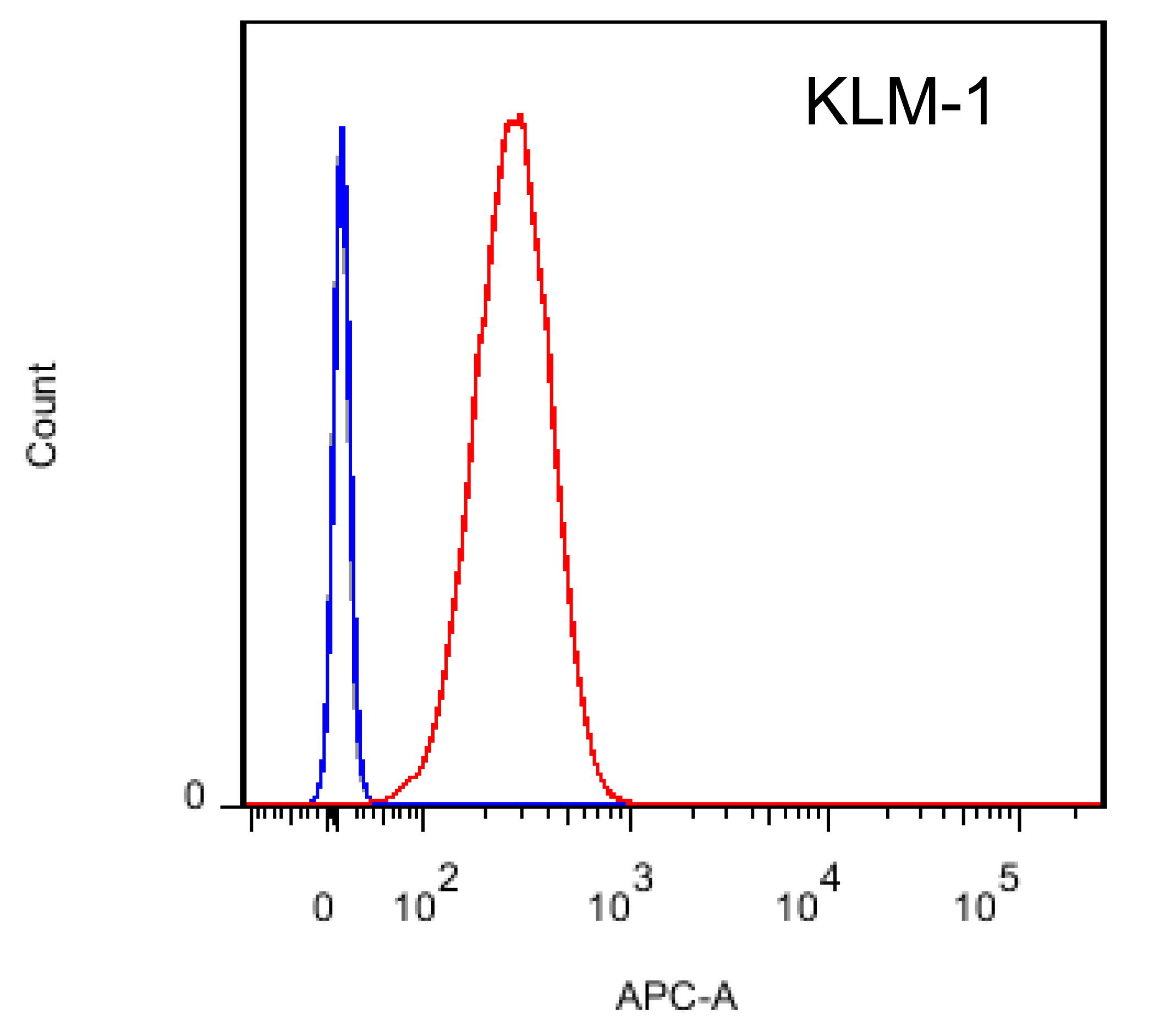
Flow cytometry assay demonstrating cell surface expression of B7-H3. KLM-1 cells (1 × 10⁶) were incubated with 5 µg antibody in 1 mL PBS containing 5% BSA. Antibody binding was detected using a Cy5-conjugated goat anti-rabbit secondary antibody. Blue line: isotype control; red line: B7-H3 antibody staining. |
| Concentration | As indicated on the vial label |
| Formulation | 80% PBS, pH 7.4; 20% glycerol; 5% trehalose; 0.04% sodium azide (preservative) |
| Shipping | Shipped on blue ice |
| Storage |
-20 to -70 °C (long-term) 4 °C (up to one week) For frequent use, aliquot to avoid repeated freeze-thaw cycles. |
Product Documents
DatasheetEG-372 Product Datasheet
Download PDFRelated Products
D7324 Tag, Mouse Monoclonal Antibody 1E2
View DetailsCatalog #: EG-283$288.00
Anti-EGFRvIII Monoclonal Antibody, recombinant
Catalog #: EG-369$250.00
Anti-B7-H6 Monoclonal Antibody, recombinant
Catalog #: EG-370$250.00
Anti-FAT1 monoclonal antibody, recombinant
Catalog #: EG-371$250.00
Anti-LAG3 monoclonal antibody, recombinant
Catalog #: EG-374$250.00
Anti-IL-13RA2 monoclonal antibody, recombinant
Catalog #: EG-373$250.00